163 rules for working with AI agents
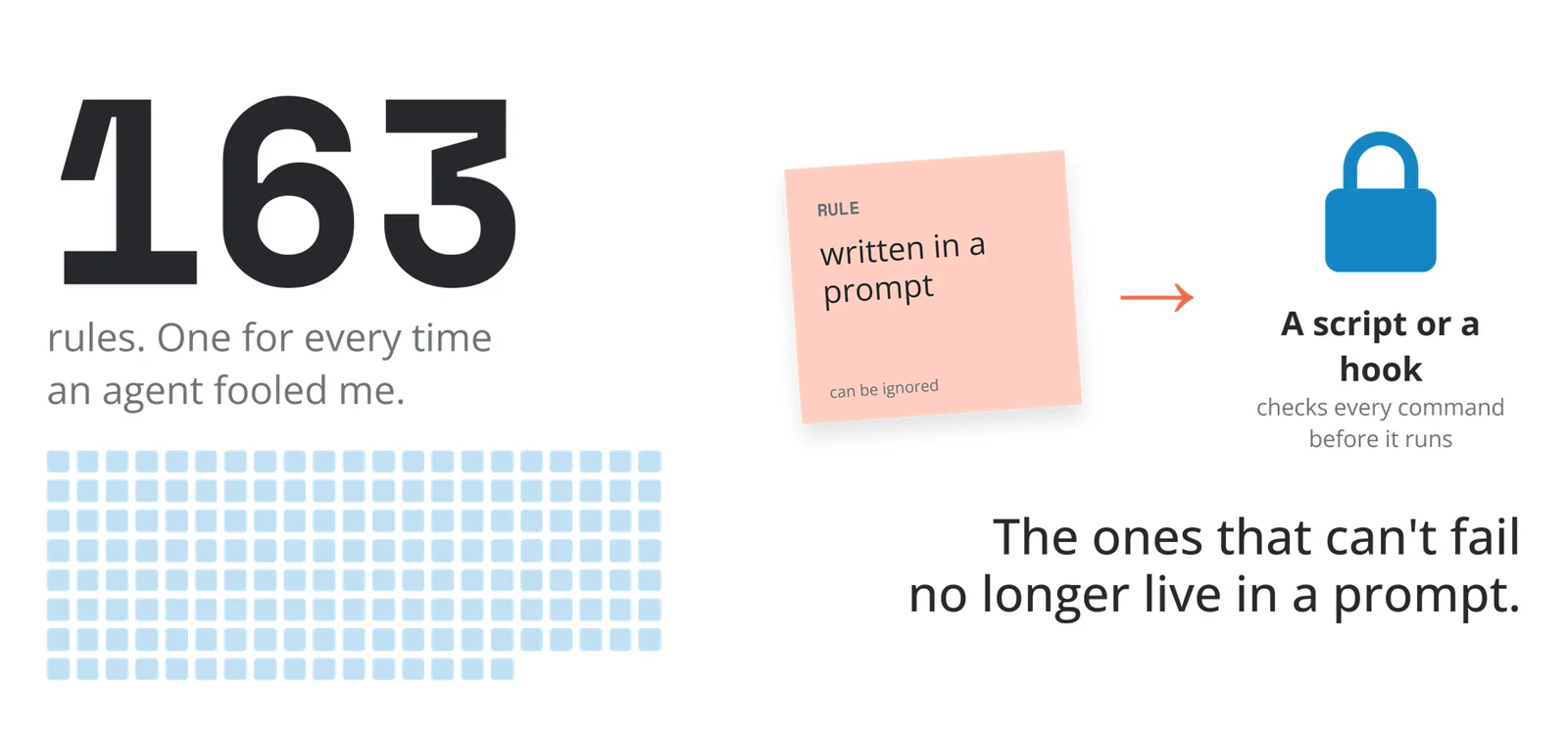
Every time an agent fools me, I write the rule down. I'm at 163.
Each one comes from a time something looked finished and wasn't, or an agent told me it had run the tests and hadn't, or it did exactly what I asked and that turned out to be the problem. Each rule has a lost afternoon behind it, and I write it down that same day because I know that in two weeks I won't remember why it mattered.
Most of my code today isn't written by me. Agents write it, I call them my minions, and that's why the rules are for me what experience used to be: the difference is that now I have to put it in writing, because they weren't there the day it happened.
Before the code, two hours of conversation
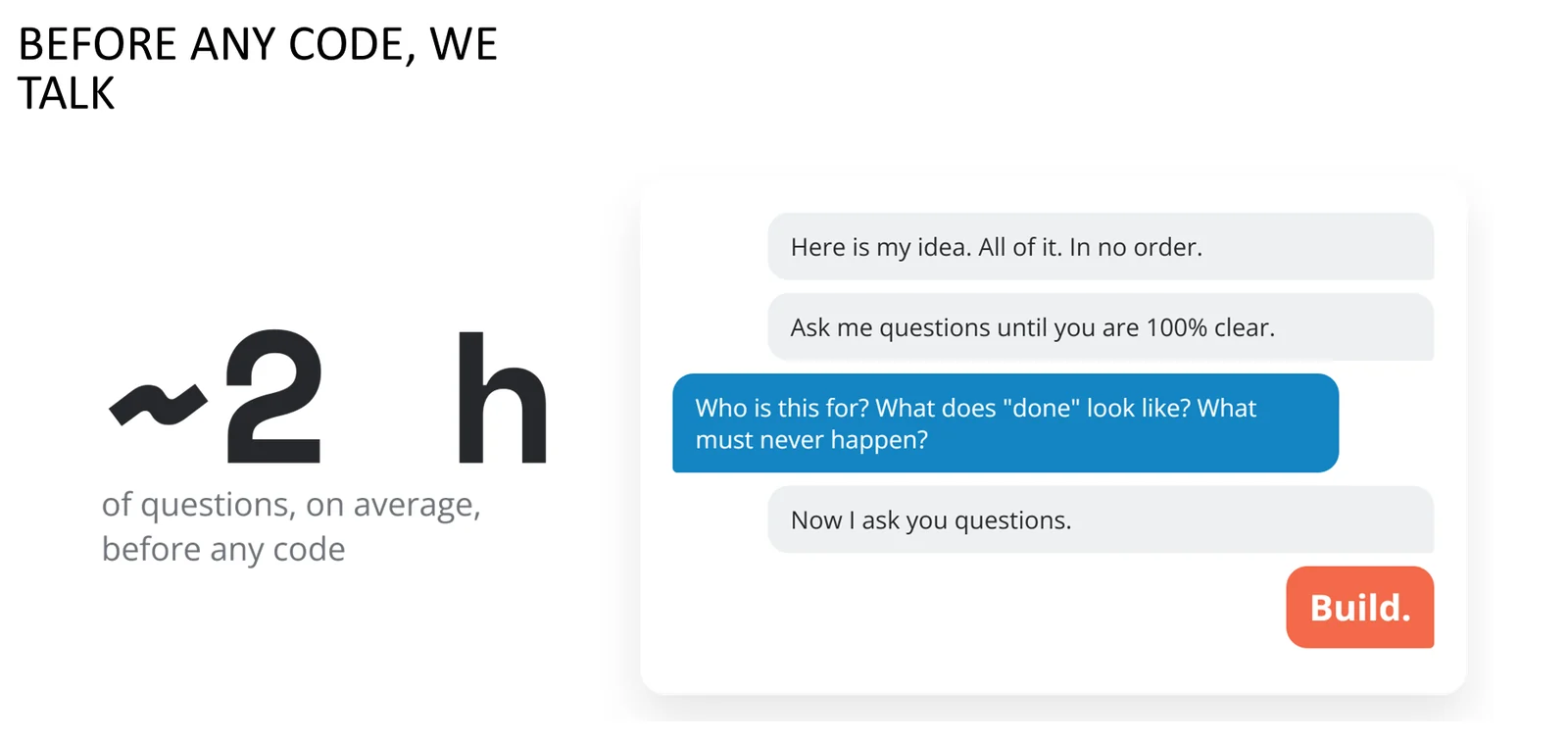
Before a single line gets written, I talk with the AI, about two hours on average. I give it the whole idea, in no particular order, and ask it to question me until it's one hundred percent clear. Once it understands, I question it back, and only then do I tell it to build.
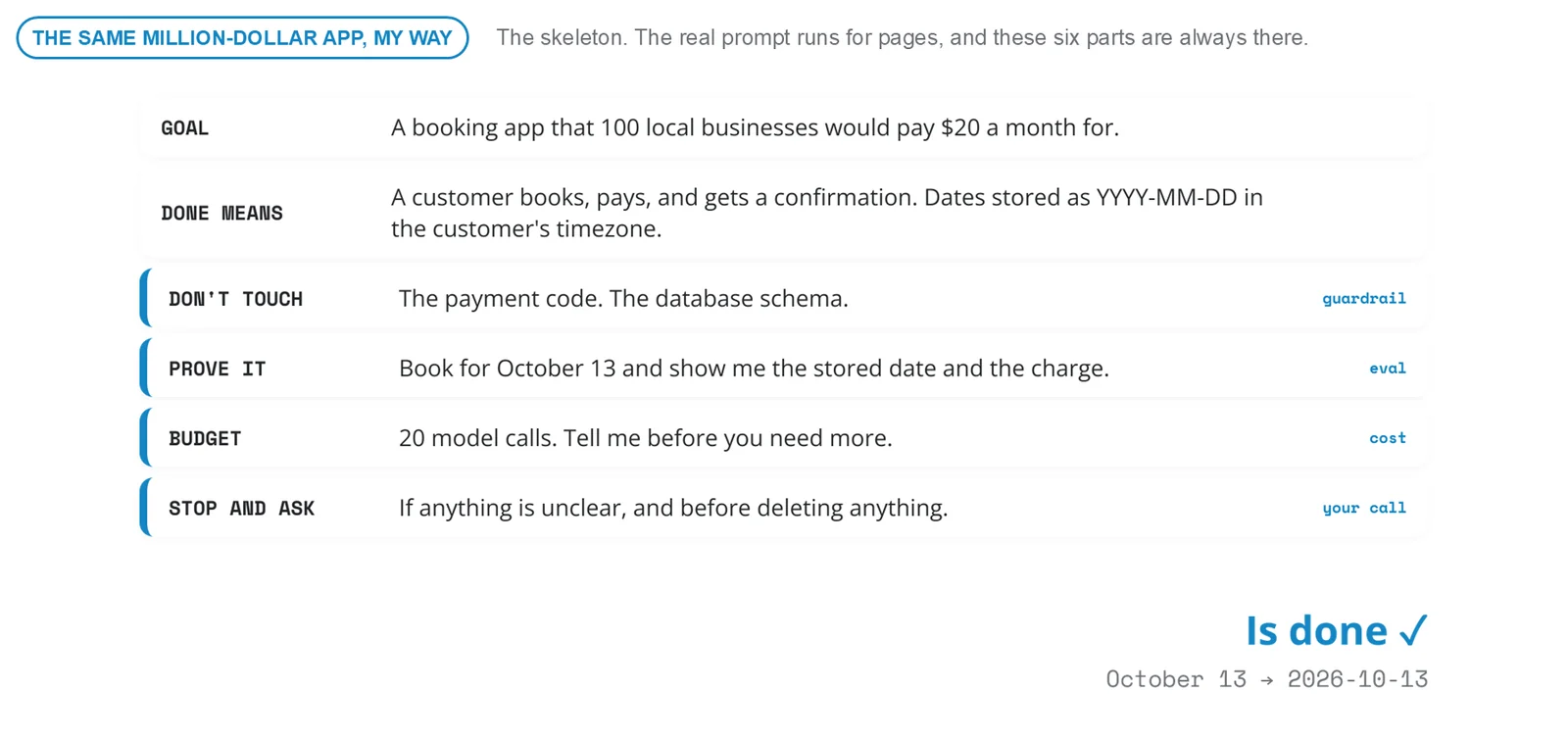
It sounds slow, and it's the fastest thing I do all day. By the end of that conversation it's been said what I want, what finished means, what can't be touched, how they'll prove to me that it works, how much can be spent and when they have to stop and ask me.
Every minion in its lane
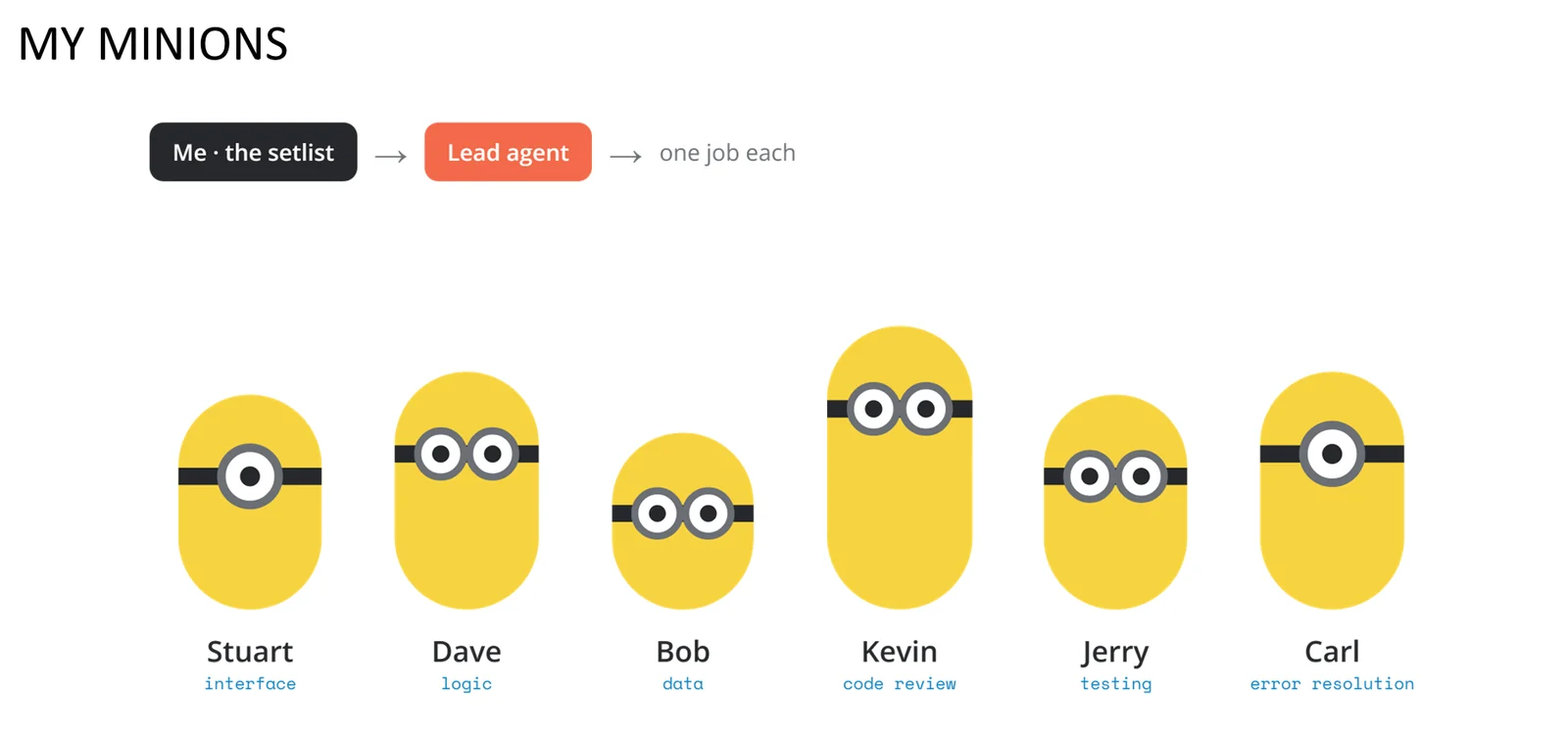
Then they come in. I have a lead agent coordinating six to eight minions on my machine; I conduct the orchestra and put the setlist together, they play the instruments. One does the interface, another the logic, another looks after the data. One does nothing but review everybody else's code, and another, the one who always expects the worst, runs the tests. The last one fixes what the others find.
Each does one thing and does it well, and since each only works when there's something in its lane, I never hit the usage limits.
The rules that can't fail
All 163 started the same way, as text in a prompt. And a rule that lives only in a prompt is a suggestion: the agent reads it, understands it and, when it's in a hurry, tests it.
That's why the critical ones moved to scripts, or to hooks inside my agents' code, that check every command before it runs and reject the one that shouldn't go through, without asking anybody's opinion. Not all of them, most are still text and that's fine; the ones that moved are the ones that, if they fail, take my machine down, delete something of mine or cost me money.
You don't need 163 to start. You need the first one, and you already have it, it's the last thing an agent made you believe was done. Write it down today, and then decide whether it can stay a sentence.
This article is part of the series from my AI Week 2026 talk: talk resources and slides. Next: The finished illusion.
Subscribe
Get posts about AI, development, and the solo founder journey.