The finished illusion
Here are two forms. An AI built both and both work, and before you read on I'll ask you for one thing: if you had to ship one to your users tomorrow, pick which.
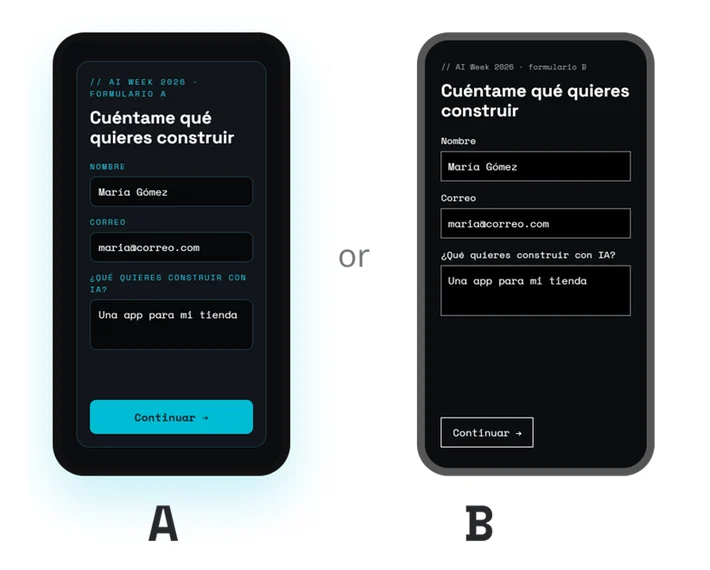
If you picked A, you're with the majority. It's the pretty one: dark background, glowing borders, the kind you look at and assume somebody who knows what they're doing made it. B looks like it was thrown together in a hurry on a Sunday night.
Now use them. Open A, fill it in, tap Continue and then go back. Everything you typed is gone. Do the same with B, the ugly one, and every field is still where you left it.
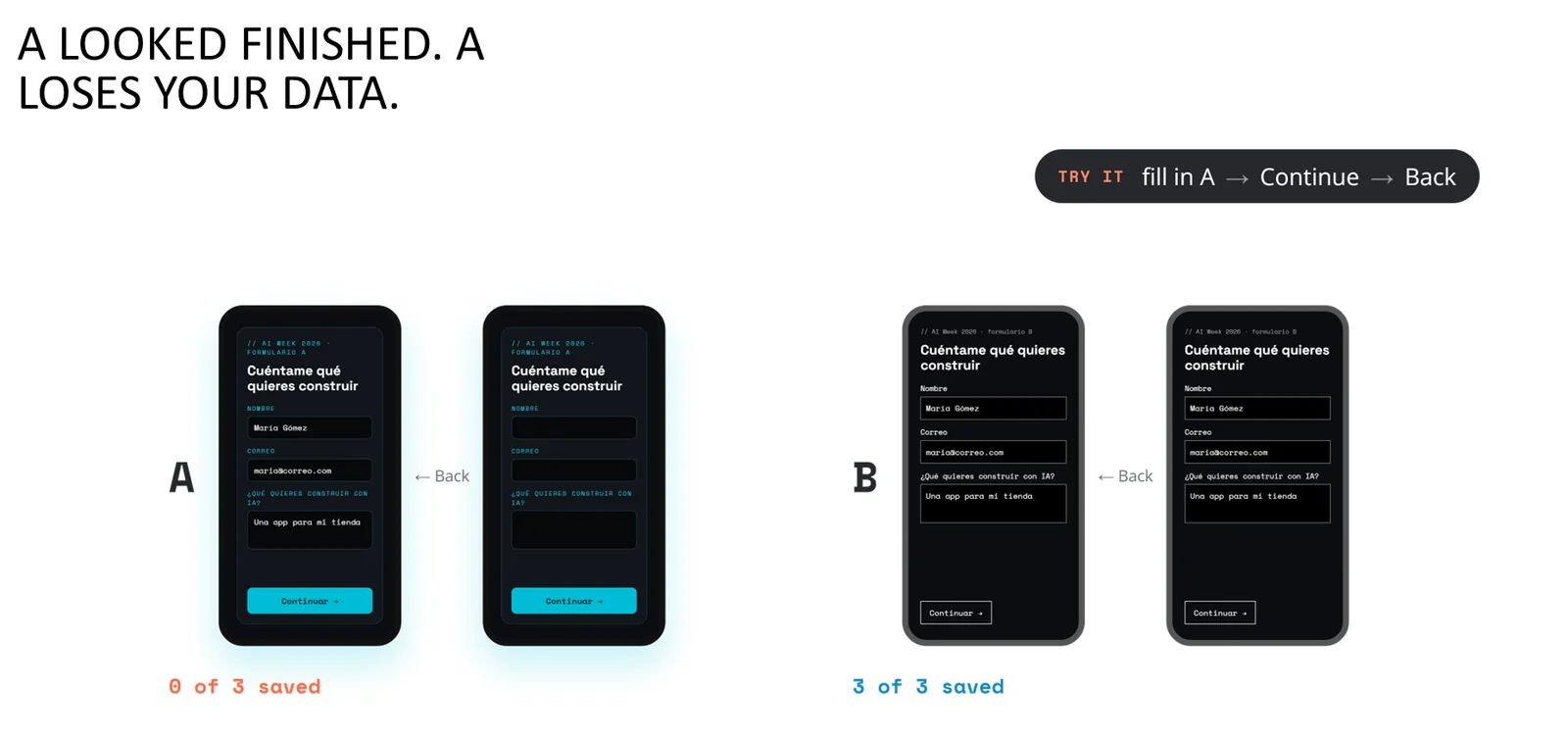
If you picked A, it wasn't for lack of intelligence. It was because it looked smooth, and when something looks smooth we stop looking at it. I call that the finished illusion, and if you work with AI it happens to you several times a day, almost always with nobody around to show you B.
The floor dropped, and that part is true
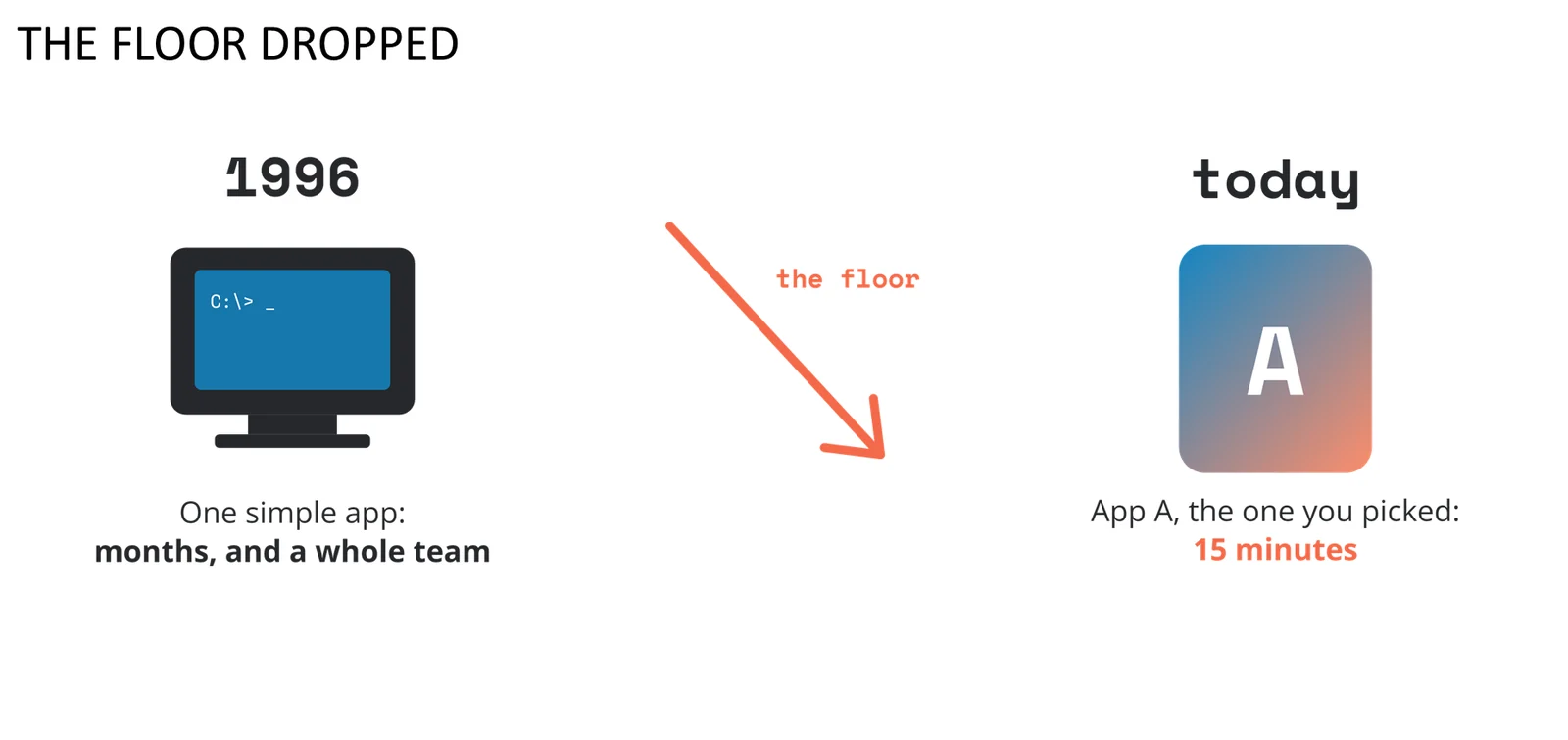
Form A took me fifteen minutes, about as long as it takes me to make a coffee and drink it. I was around six when I started tinkering with computers: my mom was taking a computing course, had nobody to leave me with, and I'd sit at the empty machines finishing the exercises before the adults did. Back then a simple application meant months of work and a whole team.
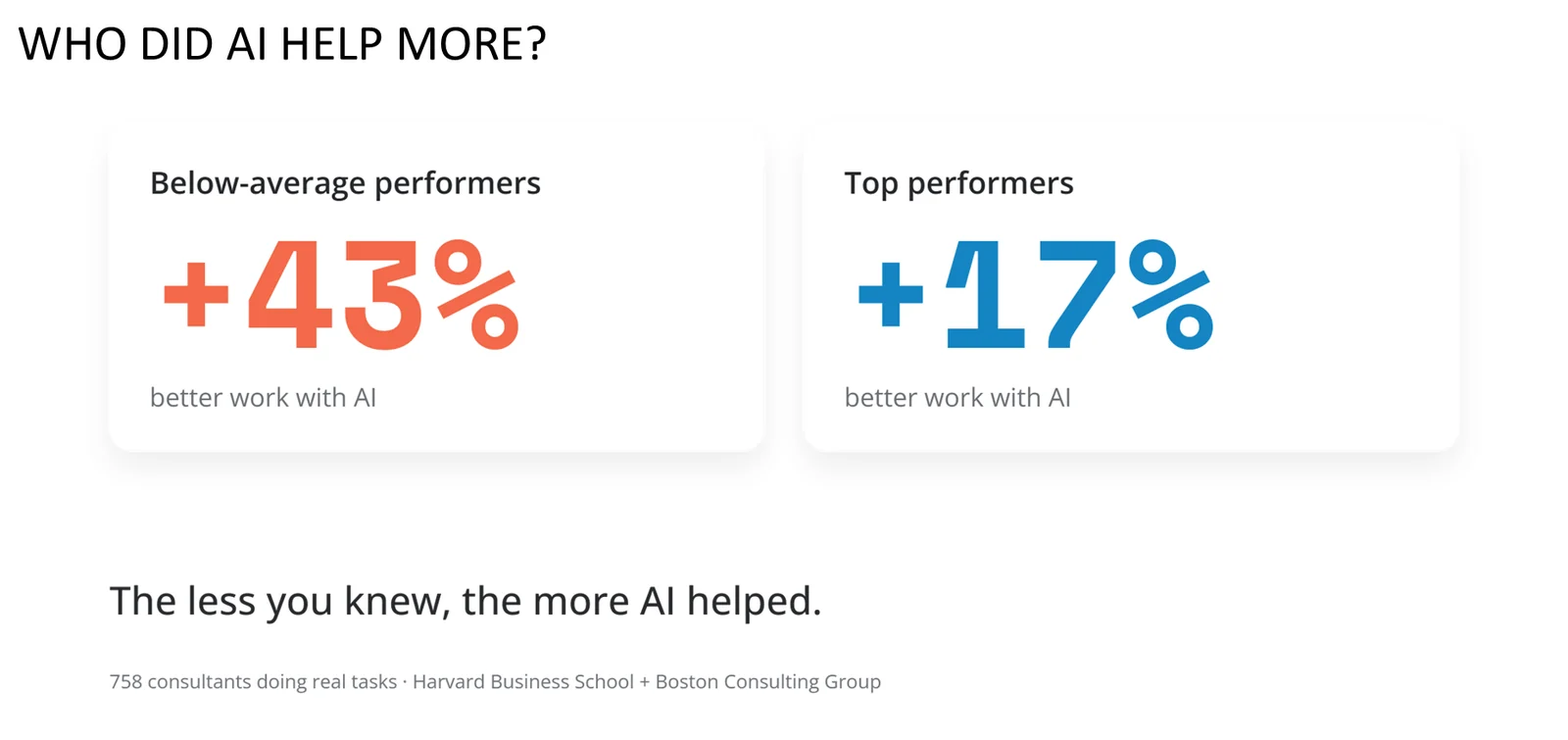
And that's not just my impression, somebody measured it. Harvard and Boston Consulting Group had 758 consultants do real tasks from their jobs, some with AI and some without, and compared each one against their own result without AI. The ones below the average improved the quality of their work by 43%, and the ones who were already good, by 17%. AI helped the person who knew less more than twice as much.
That's the floor, the minimum you need to know to get started, and it dropped for everyone. Today anybody can build an app, a website and, in theory, the next Facebook.
How the finished illusion works
The same study had a second part that almost nobody quoted. On a task that sat outside what the AI could do well, the consultants who used it were 19 percentage points less likely to get it right than the ones who worked alone: the answer was well written, and they believed it.
It isn't a beginner thing either. Another study took developers with years of experience, working in their own code, the code you know like your own house, and gave them AI tools. Afterwards they were asked how it went and they said about 20% faster. The clock said otherwise: they had taken 19% longer. That was 16 people using early-2025 tools, and the same organization that ran it now says the result is out of date and that today's tools probably do speed people up; what hasn't changed is the gap between what they felt and what the clock recorded.
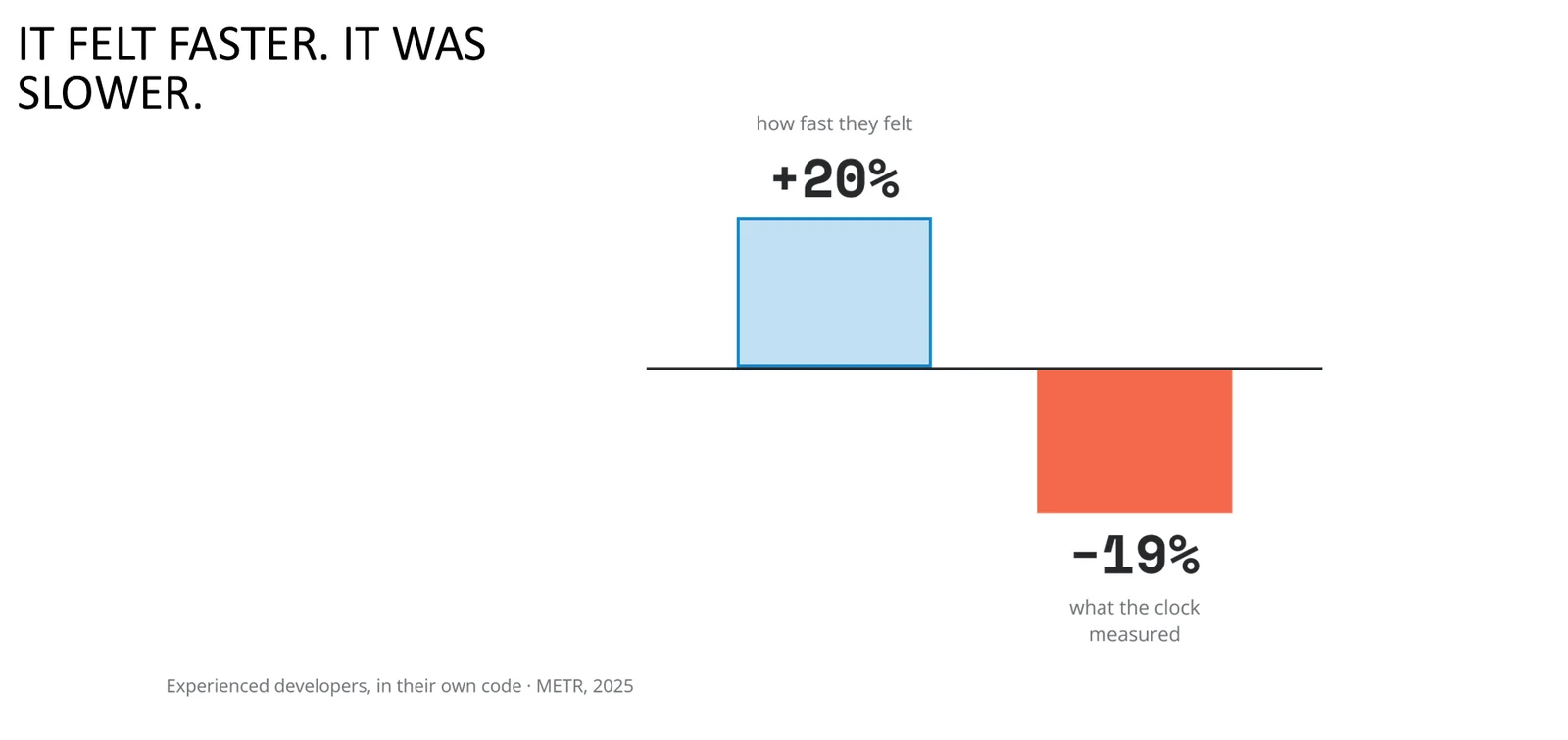
They felt faster and were slower, just like you a moment ago, picking A with all the confidence in the world. That's how the illusion works: what looks finished lends you confidence, like drywall, which looks solid until you hang something heavy on it, or like the Tinder match who looks perfect until you meet in person and the picture pixelates.
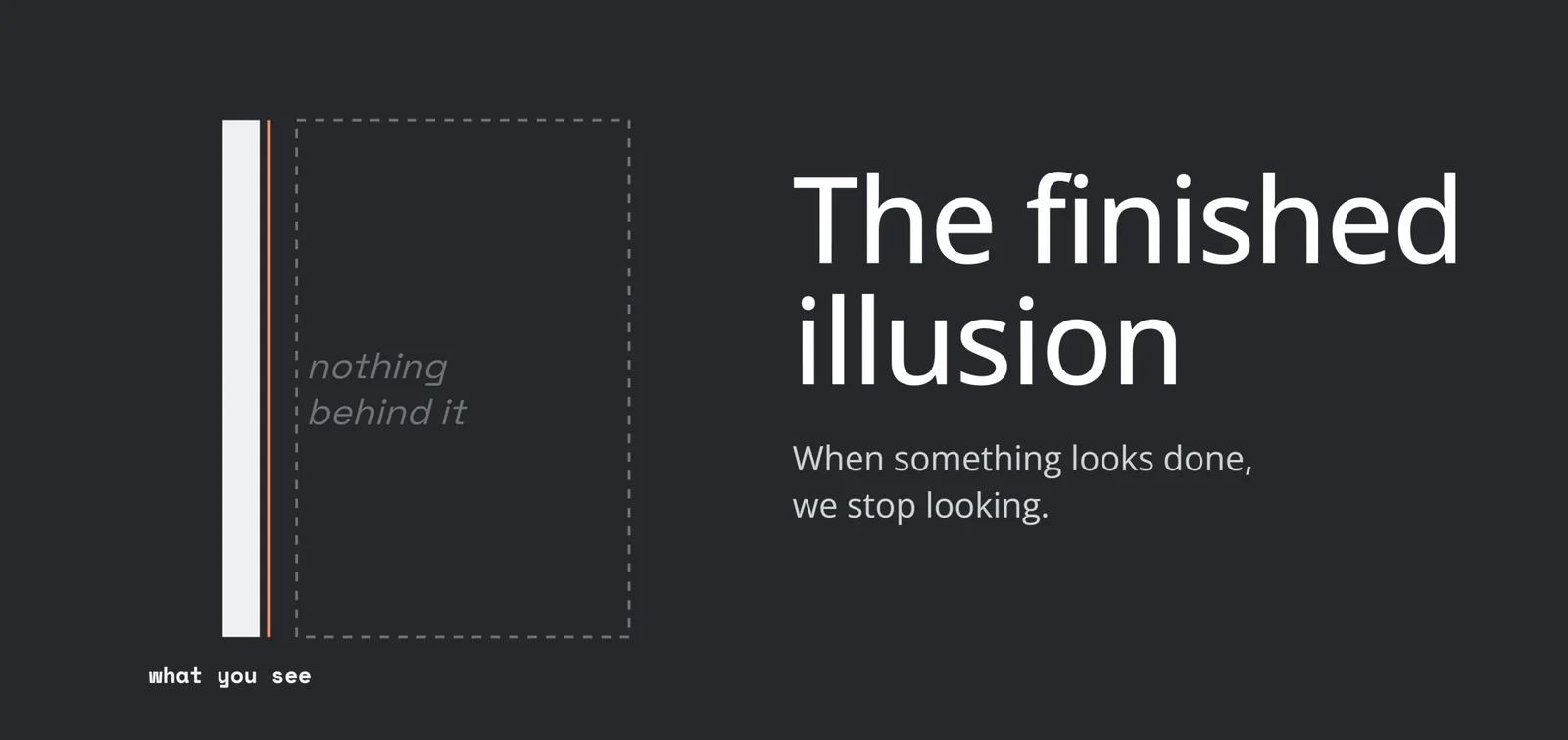
AI won't replace you, it will expose you
Being exposed isn't bad. It exposes whoever ships without checking, but it also exposes whoever does know, because the difference between the two finally shows.
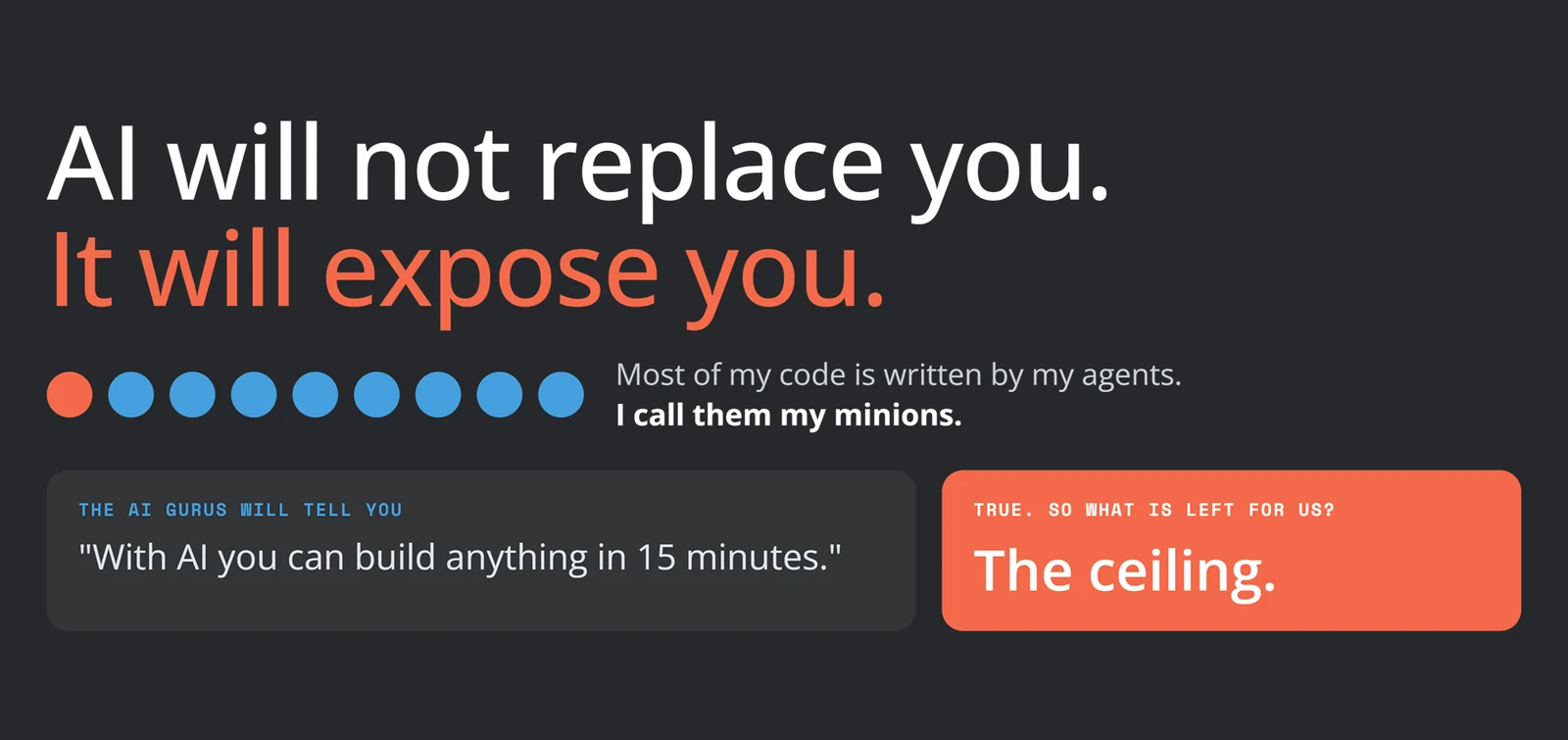
That difference has a name, and it's judgment: choosing between A and B after going back, knowing what not to push to production on a Friday because nobody will be around over the weekend to clean up the mess, remembering the WHERE before you delete. None of that comes with the model, which is why the ceiling, how good the thing you build can get, is still yours.
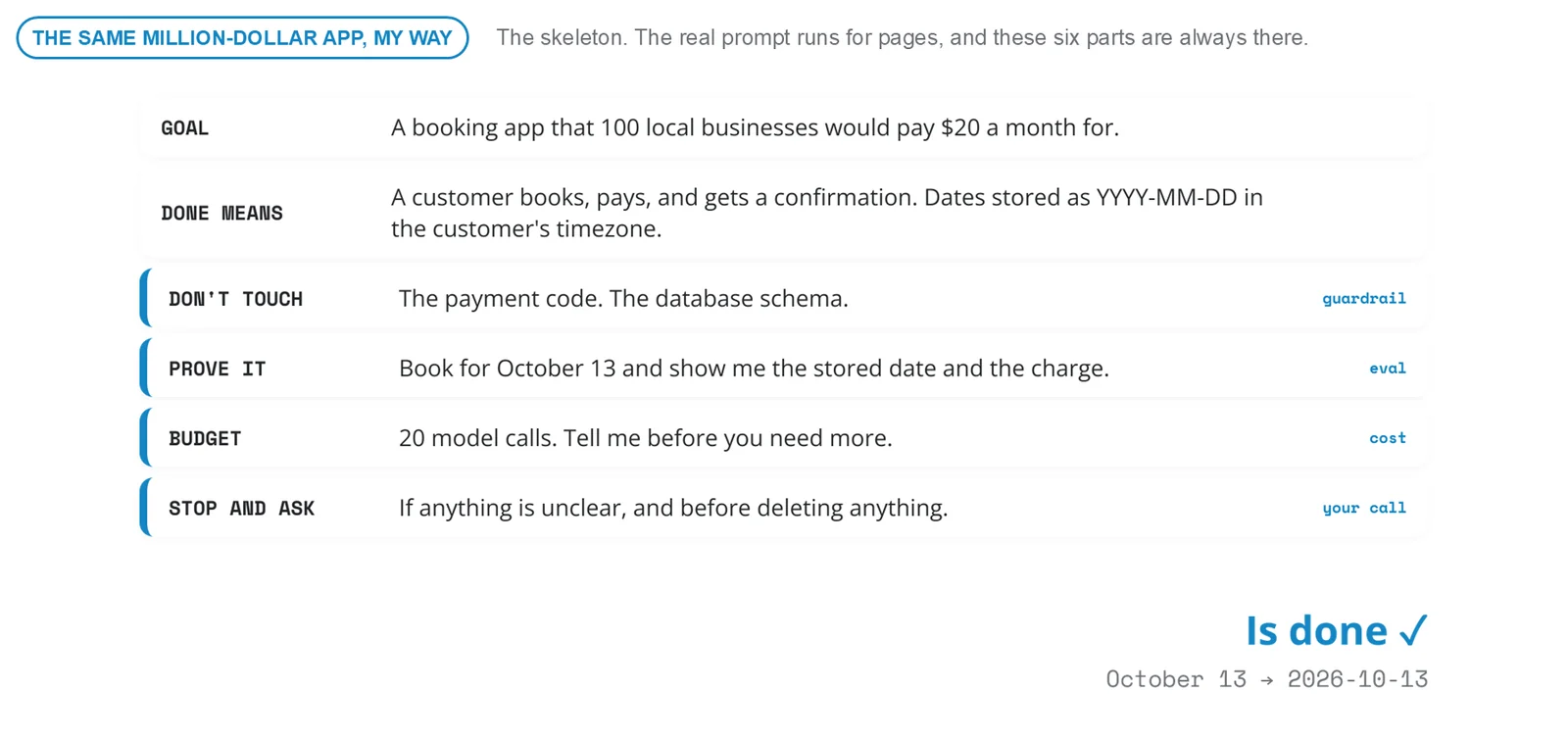
In my work that judgment became concrete in four decisions I make before I let an agent touch anything somebody cares about: which rule can't live only in a prompt, which real cases I run it against before switching it on, how much it can spend without asking me, and when the right answer is not to use an agent at all. There's a story behind each one, and nearly all of them start with something that looked finished.
For now, do one thing. Find the last thing you accepted because it looked good, a form, a summary, a pull request that passed first time, and go back.
This article is part of the series from my AI Week 2026 talk: talk resources and slides. Next: Guardrails: a rule the AI can ignore is a suggestion.
Subscribe
Get posts about AI, development, and the solo founder journey.